

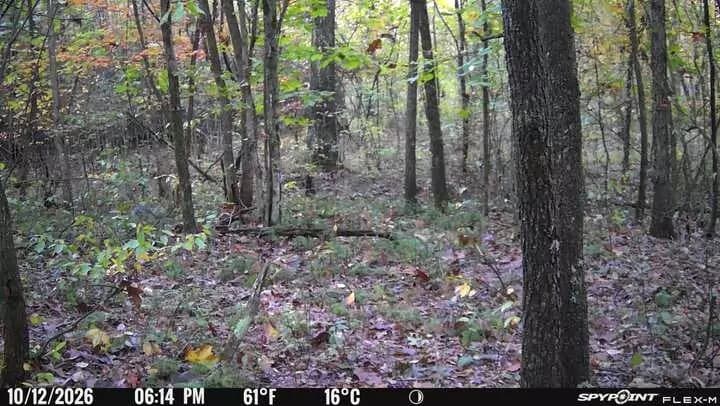
You set your trail cameras, check them a few days later, and find nothing. No bucks. No does. Not even a passing deer. If you’re wondering why you’re not seeing deer on your trail cameras, the answer may have less to do with the deer herd and more to do with how you’re monitoring it. If you find no deer on your trail cameras, here’s why.
Before moving your cameras or assuming deer have disappeared, consider these seven often-overlooked reasons your trail camera isn’t capturing activity and how to use your observations to find out what’s really happening.
1. You’re Monitoring Where Deer Travel, Not Where They Stop
A well-worn trail looks promising, but deer may move through it quickly or use it at times your camera rarely captures. Instead of focusing only on obvious trails, look for transition areas where deer slow down, change direction, or approach cover.
Try this: Move your camera near a trail intersection, terrain funnel, field entrance, or transition between bedding cover and a feeding area. Compare activity across locations rather than judging a spot by how much sign you see.
2. Your Camera Is Missing the Movement Window
Deer may be using the area, but not during the hours you’re monitoring effectively. A trail camera aimed at a field edge might capture little activity during daylight while deer enter after dark.
Check timestamps before moving equipment. Are you seeing no deer at all, or are you seeing activity outside your expected window? That distinction can help you decide whether to change locations or adjust your hunting strategy.
3. Your Trail Camera Placement Doesn’t Match the Terrain
Trail camera placement that is too high, pointed across a trail at the wrong angle, or facing direct sunlight may miss animals or produce poor images. Fast-moving deer can also pass through the detection zone before the camera triggers.
Try this: Position the camera to capture the approach rather than just the trail itself. Test the detection zone, check the manufacturer’s recommended mounting height, and avoid aiming directly into rising or setting sunlight when possible.
4. Hunting Pressure Has Changed Deer Behavior
Deer can adjust their movement in response to repeated human activity. Scouting trips, frequent camera checks, vehicle traffic, and access routes may make a location less attractive during daylight.
Consider not just where the camera is mounted, but how often you visit it and how you get there. Cellular cameras or longer intervals between checks can help reduce disturbance, depending on your setup. Do not make the mistake of forcing a buck to go nocturnal because of your trail camera strategy.
5. Your Camera Is Recording a Short-Term Pattern, Not the Whole Story
A few empty days don’t necessarily mean a location is inactive. Weather changes, food availability, crop harvest, and seasonal shifts can all influence where deer spend their time.
Keep a record of when each trail camera was active, what conditions occurred, and when you last captured deer. Comparing several weeks of observations is often more useful than reacting to one disappointing check.
6. Deer Have Found a Better Option Nearby
A nearby food source, fresh acorn drop, harvested crop field, or change in cover may draw deer away from a familiar route. The key is to look for what has changed around the camera, not just what is missing from the photos.
Scout the surrounding area for fresh tracks, droppings, browse, and other signs. If the evidence points toward a new travel corridor, test another camera location rather than repeatedly checking the same empty spot.
7. You’re Not Tracking the Patterns Behind the Photos
Trail camera images become more valuable when you connect them to dates, locations, weather, food sources, and hunting pressure. Without that context, it’s easy to keep moving cameras based on frustration instead of evidence.
This is where a hunting journal can help. With TrophyTracks, you can organize hunting observations, record locations, and compare what you’re seeing over time. Combining trail camera activity with your scouting notes can help you distinguish a poor camera setup from a genuine change in deer movement. Stop drowning in trail camera data and make it useful by using TrophyTracks.
Turn Empty Trail Camera Checks Into Useful Data
When your trail cameras aren’t capturing deer, don’t automatically assume the property has gone cold. Start by checking camera function, reviewing timestamps, evaluating placement, and looking for changes in the surrounding habitat.
Most importantly, record what you find and compare it over time. One empty camera check tells you very little. Several weeks of observations across different locations can reveal where your assumptions were wrong and where deer may be moving instead.
The goal isn’t simply to get more trail camera pictures. It’s to understand your property well enough to make better scouting and hunting decisions. If there are no deer on your trail cameras, review these 7 reasons why and adjust your trail camera strategy.