

Barometric Pressure | The Ultimate Turkey Hunting Predictor
You’ve been there. It’s 4:30 AM, you’ve got the coffee in the truck, the decoys are in the bag, and the woods are… dead. Not a peep. Not a single shock gobble. You know there are birds here—you saw them on your turkey scouting run two days ago, but today, it’s like every turkey in the county went quiet. Most hunters blame “the pressure.” Usually, they mean hunting pressure. However, the real culprit, and the ultimate turkey hunting predictor, is the other pressure: the barometric kind.
If you want to stop guessing and start filling tags, you need to understand the science behind why turkeys go quiet and how to use tools like TrophyTracks to predict those high-activity windows before you even leave the driveway.
What is Barometric Pressure (and Why Do Turkeys Care?)
Think of barometric pressure as the weight of the air above you. When the pressure is high, the air is heavy and stable. When it’s low, the air is rising, often bringing clouds, wind, and rain.
Turkeys are incredibly sensitive to these changes. Their bodies—specifically their middle ear (the paratympanic organ)—act like a biological barometer. They can feel a storm coming long before the first raindrop hits the leaves.
The “Rising Barometer” Sweet Spot
Scientific studies, including recent research using autonomous recording units, have confirmed what old-timers have said for decades: gobbling activity peaks when the barometric pressure is rising.
A rising barometer usually follows a cold front. The air clears, the wind dies down, and the sun comes out. For a turkey, this is the “all clear” signal. They’ve been hunkered down during the low-pressure storm, and now they’re ready to make up for lost time. This is when you get those “woods on fire” mornings where every bird in the hollow is screaming.
The “Falling Barometer” Dead Zone
Conversely, when the pressure drops, gobbling drops with it. Turkeys become wary. High winds and rain make it harder for them to hear predators and harder for their own calls to travel. Biology tells them to shut up and stay put. If you see the barometer tanking on your TrophyTracks app, it might be a better morning for a second cup of coffee than a long hike into the hardwoods.
How to Use TrophyPredict AI to Find the “Right Spot, Right Time”
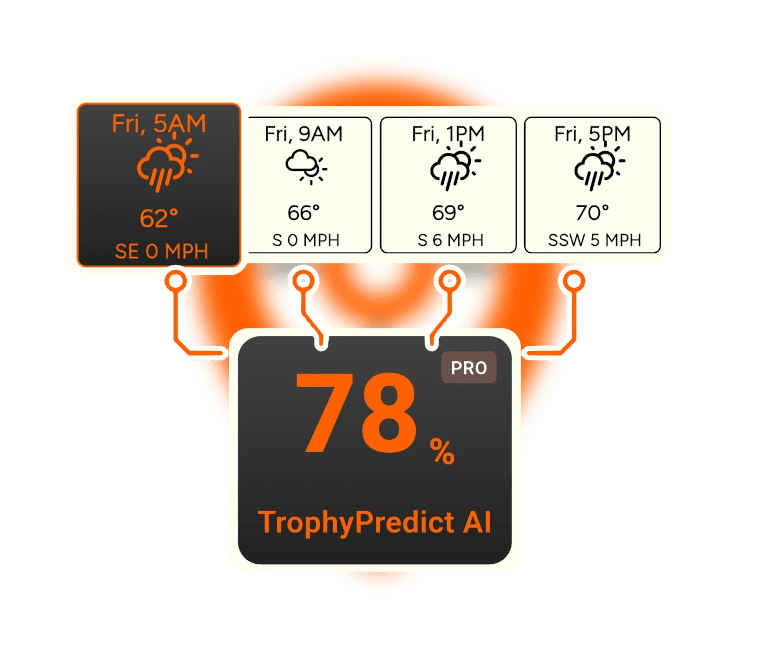
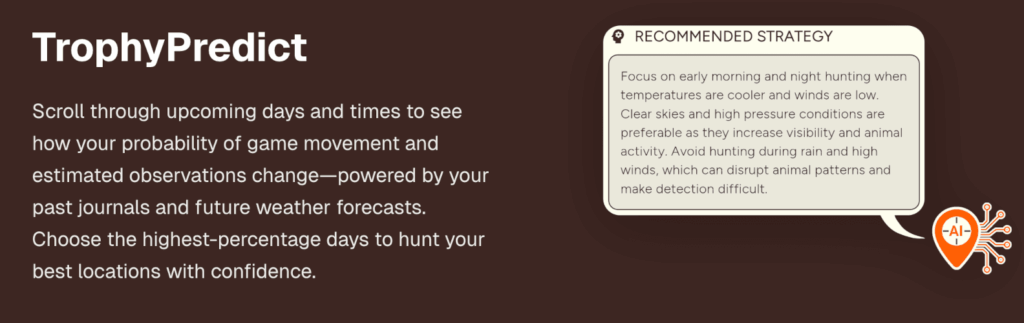
We didn’t build TrophyTracks just to be a digital journal. We built it to be your unfair advantage. While most weather apps give you a generic forecast, TrophyTracks uses TrophyPredict AI to correlate weather data with your actual hunting history.
TrophyTracks is Your Ultimate Turkey Hunting Predictor
The features in a hunting app like TrophyTracks provide key information to tackle any tough Tom. No matter how good your turkey calling is, there are uncontrollable patterns and weather attributes where you need a tool to understand them all.
1. Check the 7-Day Hunt Outlook
Before the season even starts, start watching the 7-day outlook in the app. You’re looking for those high-pressure spikes. If you see a front moving through on Tuesday with a sharp rise in pressure on Wednesday morning, that’s your “sick day” from work.
2. Layer Heat Maps with Scouting
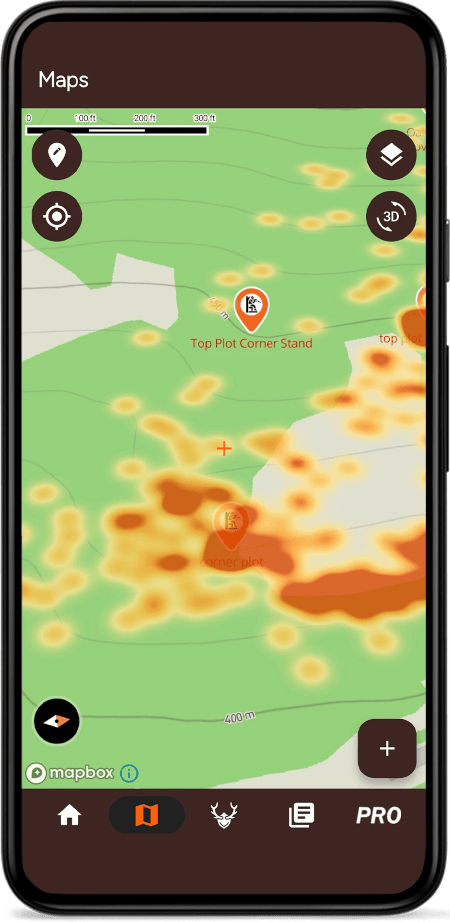
Use the TrophyTracks Heat Maps to see where you’ve had the most observations in past seasons. When the pressure is perfect, go to your high-density spots. When the pressure is sub-optimal (steady low or falling), use that time for low-impact scouting on the fringes so you don’t blow out the birds for the better days ahead.
3. Use TrophyRecall for Pattern Matching
Got a bird that just won’t cooperate? Use TrophyRecall. It looks at your past journal entries and matches upcoming weather conditions to historical days where you actually saw or harvested birds. If the app tells you that 80% of your successful hunts happened when the pressure was between 29.9 and 30.2 inHg, you know exactly when to be in the blind.
Real-World Tactics for 2026 Spring Turkey Season
With many states opening their regular seasons in mid-to-late April, timing is everything. Here’s your game plan and ultimate turkey hunting predictor.
- The “Post-Front” Push: Target the first clear morning after a spring rain. Look for a barometer reading above 30.0 inHg and rising. This is the highest probability window for aggressive gobbling.
- The High-Wind Pivot: If the pressure is low and the wind is over 10 mph, birds will often move to open fields where they can use their eyesight to stay safe. Use your TrophyTracks offline maps to find field edges and transition zones.
- The Journal Habit: Every time you hear a gobble or see a bird, log it. The auto-weather logging feature will capture the exact barometric pressure, wind, and moon phase at that moment. Over time, this builds a personalized database that beats any generic “movement moon” calendar.
Don’t Just Hunt—Hunt Smarter
The difference between a “turkey hunter” and a “consistent turkey harvester” is data. Although you can’t control the weather, but you can absolutely control how you react to it.
Stop guessing which morning is going to be “the one.” In conclusion, let the science of barometric pressure and the power of TrophyPredict AI do the heavy lifting for you and be your ultimate turkey hunting predictor.
Ready to turn the woods in your favor?
Download TrophyTracks for iOS or Android Today
Log your hunts. Predict the movement. Be at the right spot at the right time.