

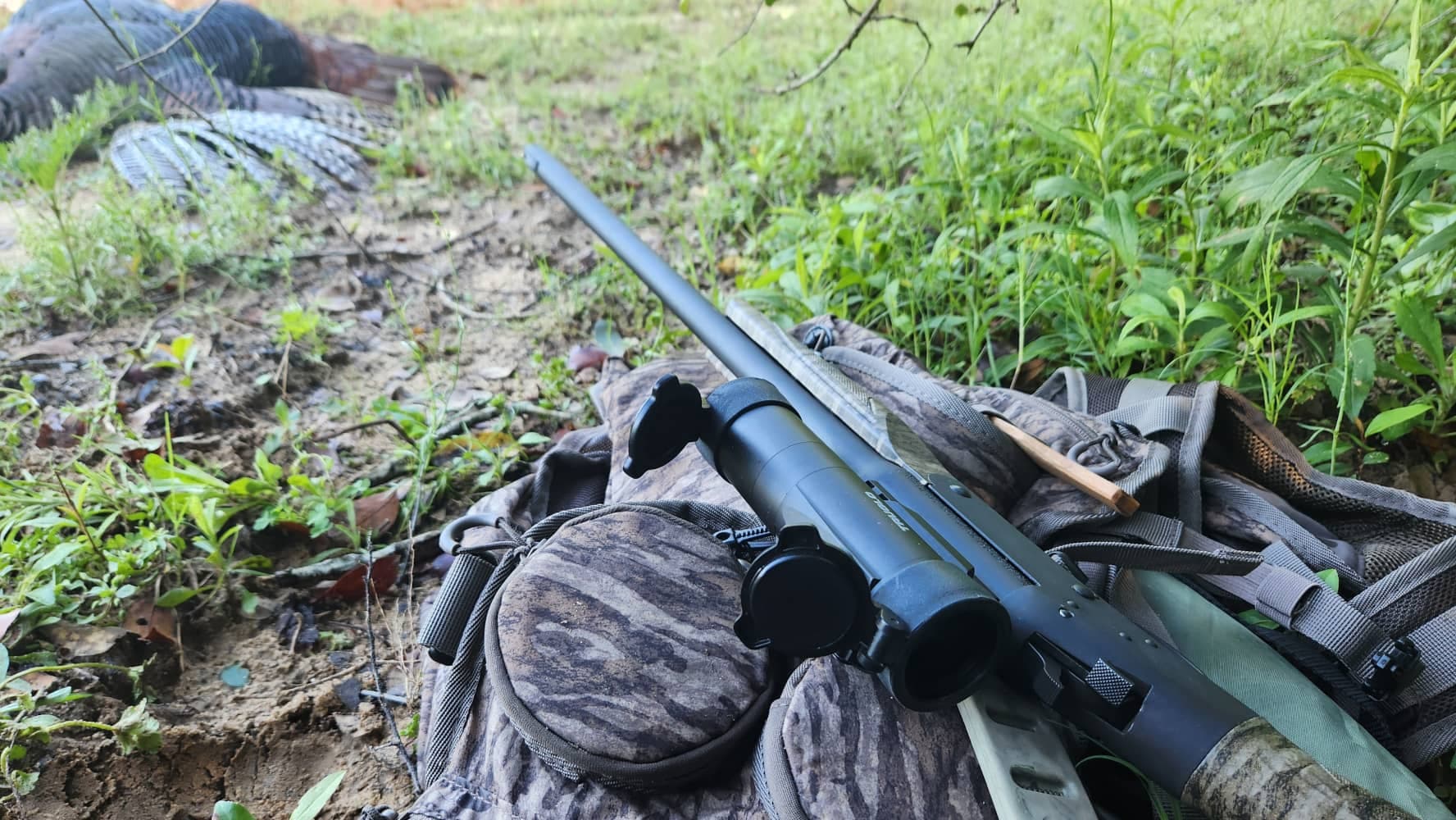
Few things frustrate turkey hunters more than a gobbler that answers once and then goes silent. While it’s tempting to call louder or more aggressively, experienced hunters know that restraint often produces better results. In spring turkey hunting, knowing when not to call is just as important as knowing how. Call smarter, not louder is one of the best turkey calling strategies in the spring.
PRO Tip: Use the TrophyTracks PRO 7-day forecast to see exactly how upcoming weather will impact game movement on your specific property.
Why Gobblers Go Quiet
As the season progresses, gobblers encounter increased hunting pressure. Pressure can also be elevated in areas with large public land tracts where heavy preseason scouting may be present. They quickly learn that loud, aggressive calling often equals danger. Additionally, gobblers with access to hens have little reason to respond vocally.
Common Reasons Gobblers Stop Gobbling
- Hens are already present
- Mid-morning breeding activity
- Weather changes, such as wind or rising temperatures
- Human pressure on public or shared land
Understanding this behavior allows hunters to adjust tactics instead of forcing a failing strategy.
Turkey Calling Tips: Match the Hen, Not the Hunter
Effective calling is about realism. Spring hens rarely scream continuously. Instead, they communicate subtly while moving and feeding. Gobblers are smart enough to know when a call is out of context and make them just cautious enough to hang up in many situations.
High-percentage Spring Turkey Calling Strategies
- Soft yelps
- Clucks and purrs
- Feeding chatter
- Strategic silence
Calling sparingly and allowing long pauses often convinces gobblers that a hen is unconcerned and stationary, which is exactly what they want.
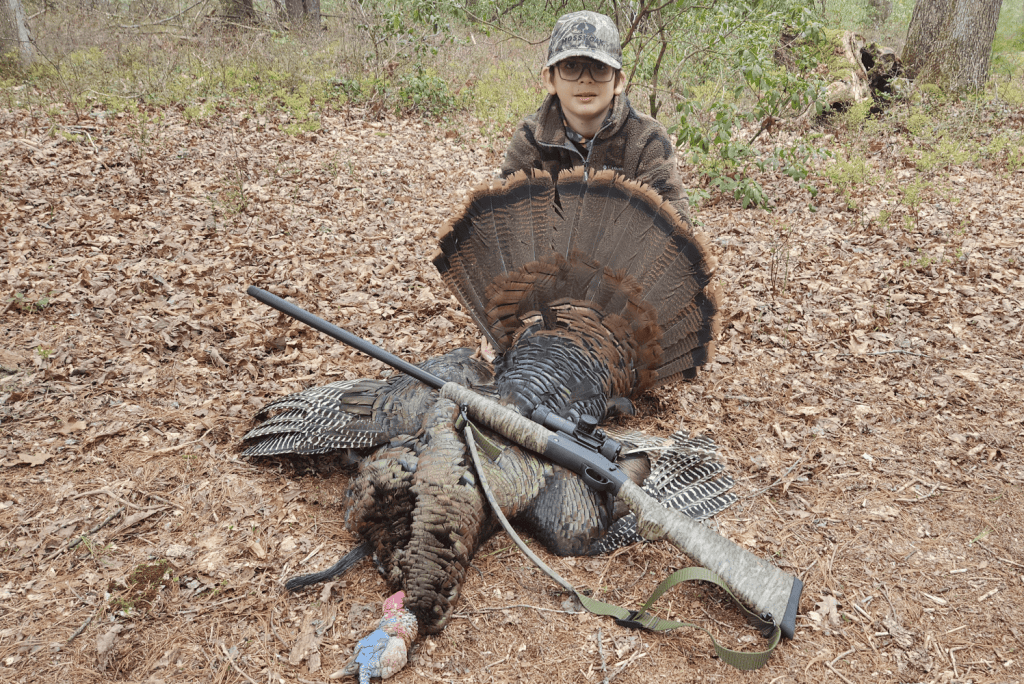
Spring Turkey Calling Strategies: Timing Matters More Than Volume
Many hunters overcall early. Gobblers are most responsive after fly-down and again late morning when hens leave to nest. Midday calling should be minimal and situational. Overcalling for pressured turkeys can be the fastest way to ruin a location.
A proven strategy for silent gobblers:
- Call softly and wait 20–30 minutes
- Make small positional adjustments if legal and safe
- Call again only if the terrain prevents the bird from locating you
Patience consistently outperforms aggression. Sometimes the best turkey hunting tip is to shut up. If you know gobblers are in an area, wait them out and focus on areas where they will move to rather than calling.
Sound behaves differently depending on terrain and weather. Calling from below a ridge allows sound to travel upward naturally. Wind direction and humidity significantly affect how far and how clearly calls carry. Smart turkey hunters call from shaded areas, avoid skyline ridges, and gobblers approach uphill when possible. When you consider the terrain as part of your turkey hunting strategy, calling doesn’t have to be the focus.
Interested in learning more about how different weather patterns impact turkeys? Check out our article, 3 Weather Patterns in Turkey Hunting Season Where Gobblers Go Nuts.
When Silence Is the Best Turkey Calling Strategy
One of the most effective tactics for pressured birds is silence. Even if you have the best turkey calls money can buy, often the best approach is to be quiet. If a gobbler knows where you are, continued calling may actually stop him short. Let curiosity work for you. A silent “hen” often forces a gobbler to investigate.
Spring Turkey Calling Strategies with High Confidence
Turkey calling is less about perfect sound and more about believable timing. Timing means fewer call sequences, better setups to call from, and longer time between each call. Focus less on the best turkey calls on the market and rather on how you are calling. Calling is sexy, and nothing beats hearing a gobbler respond; however, more often than not, the bigger, older birds are killed with patience rather than an elaborate calling cadence.
Bottom line: Smart spring turkey calling is subtle, patient, and situational. Hunters who resist the urge to overcall consistently kill more birds—especially when gobblers go quiet. When the spring season gets tough, switch up your spring turkey calling strategies to give yourself a better chance at a big gobbler.